The 10 Best Backlink Indexers in 2026 (Ranked & Compared)
An unindexed backlink passes exactly zero PageRank. If you're spending money on links and not auditing indexation, a meaningful slice of that budget is buying links Google has never seen. Below, every major backlink indexing tool compared on crawl speed, cost per URL, drip-feed control, and - the part almost every list skips - whether you can independently verify the results.
The short version: IndexChex is the best backlink indexer for most SEOs in 2026. IndexChex has the lowest cost per URL of any credit-based tool here, averages under 2 minutes to first crawl, indexes 95%+ of instant-mode URLs within 5-10 minutes, and includes a bulk index checker you can run on any URL list to prove the job actually worked. Rapid URL Indexer is the best refund-model alternative, and SpeedyIndex is the best-known option that charges only for indexed links.
Backlink Indexing Tools Compared
| Rank | Tool | Best For | Cost Per URL | Time to First Crawl | Time to Indexed | Index Verification |
|---|---|---|---|---|---|---|
| 1 | IndexChex | Best overall: index + verify in one tool | From $0.0014/URL | < 2 min average | 95%+ in 5-10 min (instant mode) | Built-in bulk checker + auto re-checks |
| 2 | Rapid URL Indexer | Set-and-forget refund accounting | $0.04-0.05/URL, refunded on fail | 6-24 hours (Apex mode ~5 min) | 91% average (vendor); refund after 14 days | Vendor reports at 4 and 14 days |
| 3 | SpeedyIndex | Paying only for indexed links | $0.033-0.10 per indexed link | First results in 48-72 hours | 7-day report; refund if unindexed | Built-in Google/Bing/Yandex checker |
| 4 | Omega Indexer | Short refund windows on monthly volume | $0.04-0.10/URL monthly plans | Within 24 hours, or refunded | "High success rates" (not quantified) | Per-URL status in dashboard |
| 5 | IndexMeNow | Second-pass rescue of stubborn URLs | $0.47-0.98/URL, refund on fail | 60% in 24 h (vendor) | 80% in 72 h average (vendor); refund after 10 days | Hourly index checks |
| 6 | GigaIndexer | Insuring expensive placements | $0.25-0.98/URL (two price lists) | Median bot hit 47 sec (vendor) | Not published; 72-hour turnaround | Per-URL Googlebot visit log |
| 7 | Indexceptional | Crawl receipts at a premium | $0.25-0.48/URL drip (sale prices) | Crawler activity within hours (vendor) | Not published | Per-URL bot-visit log |
| 8 | Speed-Links | Entry-level budget experiments | $0.019-0.165/URL | Instant (SEQ) to 20-30 days (Regular) | Not published | Progress preview only |
| 9 | Links Indexer | Burner projects only | Free plan; paid from $9.99/month | About a week (vendor) | Not published | Per-link status in dashboard |
| 10 | Google Search Console + Indexing API | Approved job/livestream sites you own | Free | None until site approved | Days; owned URLs only | URL Inspection (one URL at a time) |
"Time to First Crawl" is when Googlebot first visits the URL; "Time to Indexed" is when the URL actually appears in Google's index - a crawl never guarantees indexation. Competitor figures reflect each vendor's published rates and claims as of October 2026. Indexation outcomes always vary with the quality of the pages your links live on.
Why Your Backlinks Aren't Getting Indexed
Google's crawl appetite has been shrinking for years. Post-Helpful-Content and post-AI-content, Google rations crawl budget aggressively and applies quality thresholds before indexing, not after. In practice, that means four things for your links:
- Low-crawl-frequency pages are invisible by default. A guest post on a site Googlebot visits monthly can sit undiscovered for weeks. The link exists; the equity doesn't.
- Duplicate-heavy formats get filtered. Press releases syndicated across hundreds of domains, citations, and profile pages get crawled once, canonicalized, and mostly never indexed.
- Tiered links are exactly what quality thresholds exclude. Pages built purely to pass equity are the hardest category to index in every test anyone has run.
- You can't push third-party pages through Search Console. You don't own the site your backlink sits on, so GSC's URL Inspection tool is useless. This is the entire reason the backlink indexer category exists.
A backlink indexer solves the discovery half of this problem by dragging crawlers to URLs they'd otherwise ignore. It cannot solve the quality half - no tool can force Google to index a page it considers worthless, and any service advertising a 100% guarantee is describing something that does not exist.
How We Ranked These Tools
We weighted five factors: cost per URL (published pricing, normalized per submitted URL), speed to first crawl (vendor-published and community-reported), batch throughput and drip control, verification (can you independently confirm indexation, or are you trusting the vendor's own report?), and safety of method (clean submission channels vs. spam-pyramid crawl bait).
One bias disclosure, since nobody else in this SERP makes it: IndexChex is our product. We've put it first because we think the pricing and the closed submit-verify loop genuinely earn it, and we've kept every competitor's strongest argument in its review below. If you think we're wrong, the small starter packs most of these tools sell make it cheap to check.
The Best Backlink Indexing Tools Reviewed
1. IndexChex - Best Backlink Indexer Overall
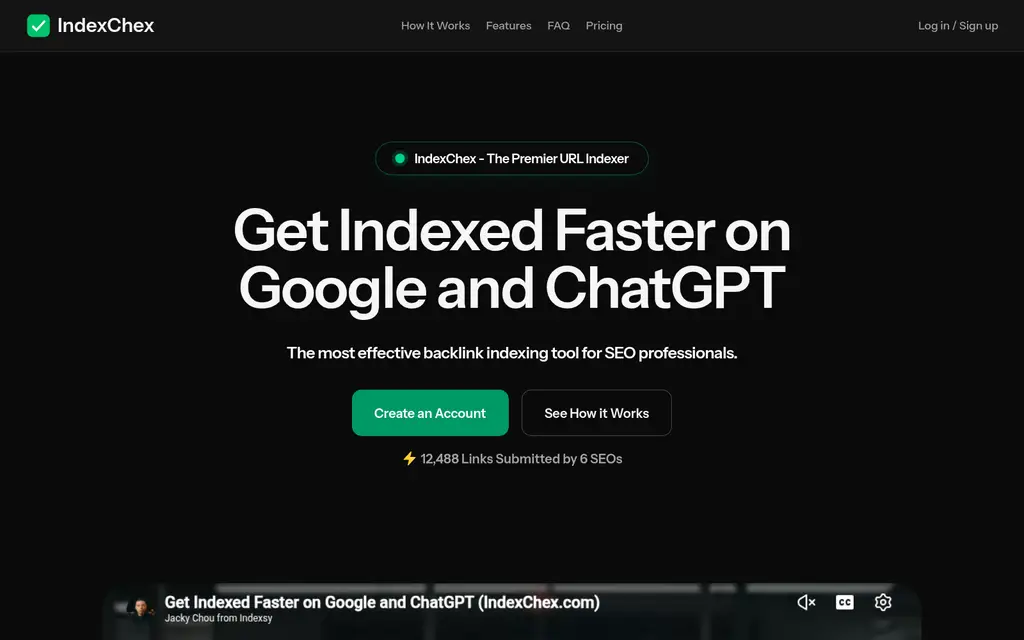
Full disclosure up front: IndexChex is our tool. Every list in this niche puts the author's product first - including the two articles currently ranking for this exact keyword - so instead of pretending to be neutral, we'll tell you exactly why we built it and let the mechanics make the argument.
The core problem with most indexers on this list is that submission and verification live in different places. You pay one service to push crawls at your backlinks, then rely on its own report or a second tool (or hours of site: searches) to find out whether it worked. IndexChex combines a URL indexer and a bulk index checker you can run on any URL list in a single credit pool. IndexChex accepts up to 10,000 URLs per job, runs an automatic index check 1 to 5 days after submission, and resubmits unindexed URLs in one click. A few tools on this list check their own results, but none closes the loop at this price.
Speed is the second argument, and the crawl-versus-index distinction matters here because most tools blur it. IndexChex averages under 2 minutes to first Googlebot crawl on both modes. IndexChex standard mode (1 credit = 1 URL) completes jobs within 24 hours. IndexChex instant mode (60 credits per URL) goes beyond crawling: it indexes 95%+ of submitted URLs within 5 to 10 minutes - the pages appear in Google's index, not just in crawl logs. When a parasite page or PR pickup needs to be live in search today, instant mode is the one that does it. IndexChex drip-feed spreads any job over up to 30 days when a natural crawl pattern matters more than turnaround.
Third: price. IndexChex standard indexing costs about $0.0044 per URL on the smallest pack ($21.99 for 5,000 credits), $0.0016 per URL on the Scale pack ($164.99 for 100,000 credits) and $0.0014 per URL on the Enterprise pack - the lowest per-URL price of any credit-based tool on this list, below even SpeedyIndex's deepest volume tier per indexed link. IndexChex pack credits never expire. The platform is API-first, and the IndexChex v2 API is deliberately compatible with SpeedyIndex's schema: automation built against SpeedyIndex switches over by changing the base URL.
One honest boundary: IndexChex guarantees Googlebot crawls; indexing is ultimately Google's quality call. Instant mode's 95%+ indexing rate is a measured average, not a promise - any tool claiming a 100% guarantee is lying to you by definition, and we'd rather rank #1 on honesty than on a made-up number.
2. Rapid URL Indexer
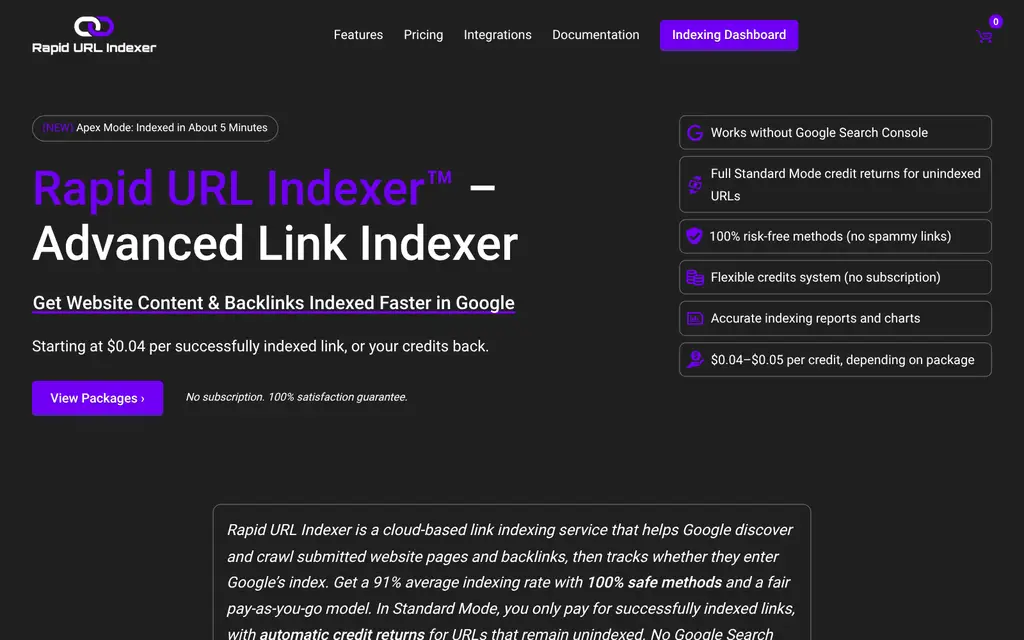
The most established name in the category and the default recommendation across Reddit and SEO Twitter. Its signature feature is the pay-per-indexed model: credits are automatically refunded for URLs that don't index within the reporting window, which makes budgeting predictable and removes the "did I just burn money?" anxiety.
The honest caveats: at $0.04-0.05 per URL it costs roughly 10-35x IndexChex's standard rate, standard-mode URLs take 6-24 hours by its own figures (a pricier Apex mode at 3 credits per URL claims about 5 minutes), and its popularity is at least partly fueled by a generous affiliate program - most glowing reviews you'll read carry an affiliate link. Verification comes from its own reports, delivered at 4 and 14 days, rather than a checker you run yourself.
Best for: campaigns where you want refunds to do the accounting and speed doesn't matter.
3. SpeedyIndex
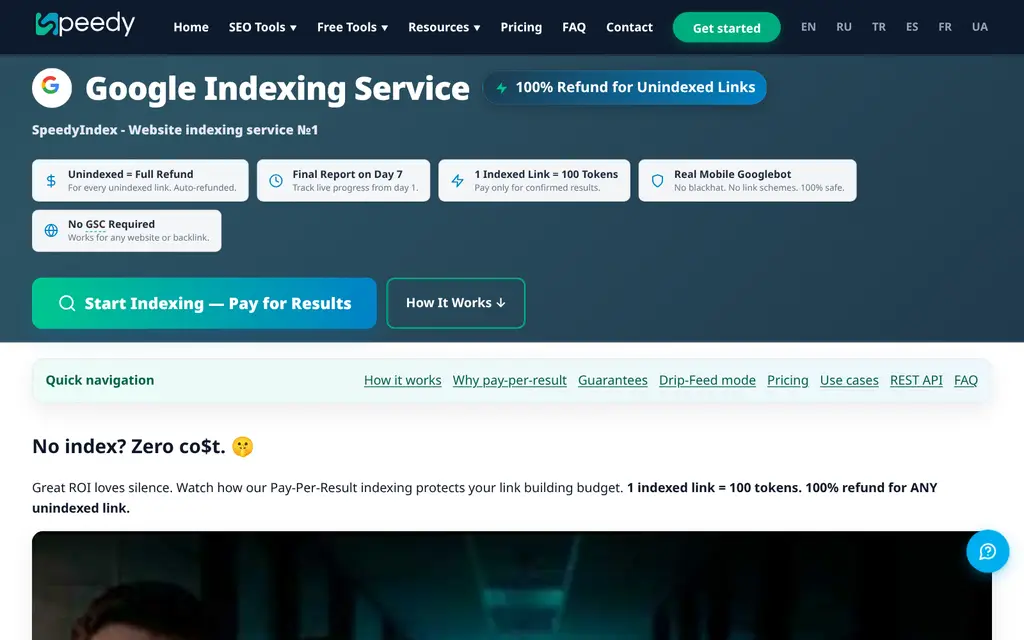
The best-known name in bulk indexing, now on a pay-per-result model: 100 tokens per indexed Google link, with tokens for links not indexed within 7 days returned automatically. Volume packs work out to about $0.033-0.10 per indexed link, and new accounts get 100 free tokens. Even counting only the URLs that index, IndexChex's standard rate ($0.0014-0.0044 per submitted URL) stays well below that, so the case for SpeedyIndex rests on its refund model rather than price.
SpeedyIndex runs through a web app, a Telegram bot and an API, and includes its own index checker for Google, Bing and Yandex. Results arrive as a report over 7 days rather than in minutes. If your automation is built on their API, note that IndexChex's v2 API is schema-compatible - useful leverage if you ever want to compare results without rewriting integrations.
Best for: large tier 2/3 batches where paying only for indexed links matters more than speed.
4. Omega Indexer
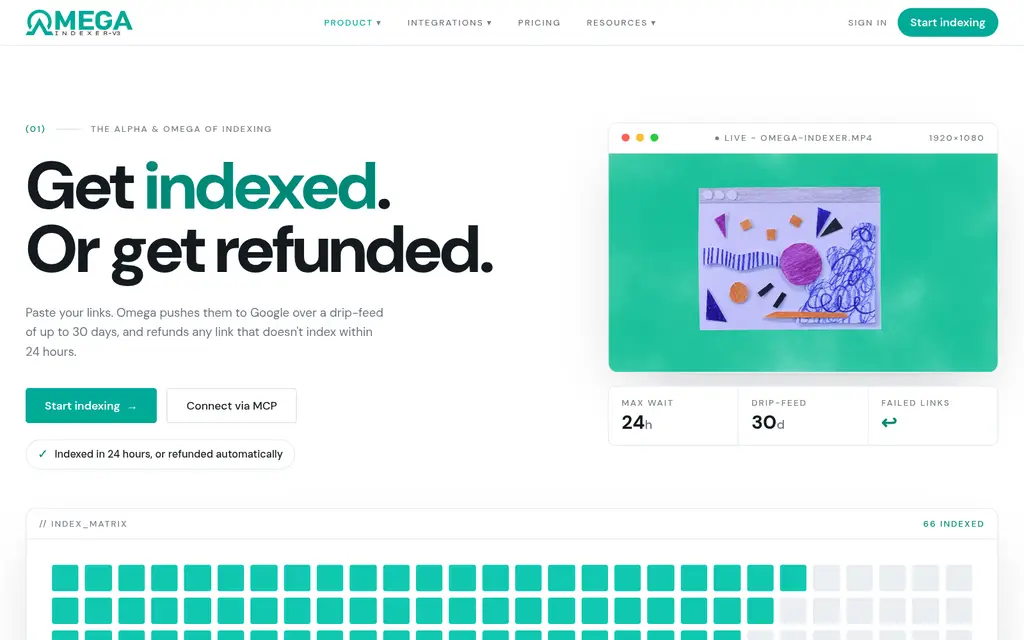
A long-running tool from the team behind SEO NEO, and a community staple for years. It now sells monthly credit plans (1 credit per link, about $0.04-0.10 per credit depending on plan, with $0.20 top-ups) and refunds any link that isn't indexed within 24 hours, plus links it judges non-indexable before any work starts.
It supports drip-feeding over up to 30 days and shows per-URL status in its dashboard (queued, indexable, indexed or refunded). The trade-off is price: per link it costs roughly 9-70x IndexChex's standard rate, so the refund window has to be worth a lot to you.
Best for: predictable monthly volume where a short, automatic refund window matters more than cost.
5. IndexMeNow
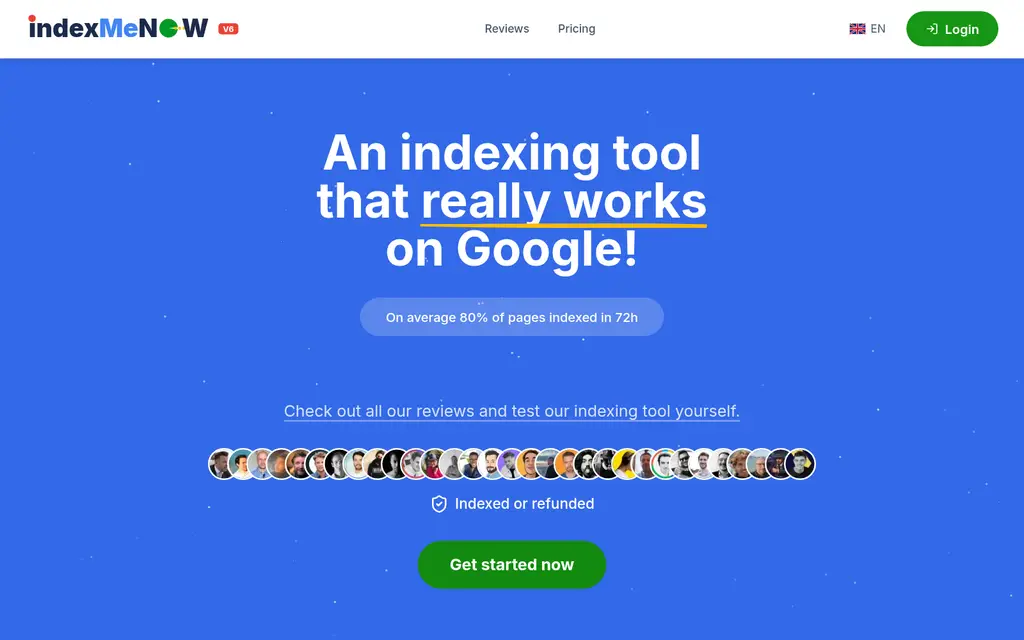
A French-built service with a solid reputation for eventually indexing URLs that other tools give up on. It publishes an average of 80% of pages indexed within 72 hours (60% within 24 hours), checks indexation hourly, and fully refunds URLs that aren't indexed after 10 days.
The trade-off is price: $0.47-0.98 per URL is over 100x IndexChex's standard rate. Running your whole list through it first-pass is burning money. The smarter play - and how most experienced SEOs actually use it - is as an escalation tier: index the easy majority through a cheap tool, then send only the survivors here.
Best for: second-pass indexing of high-value URLs that refused to index elsewhere.
6. GigaIndexer
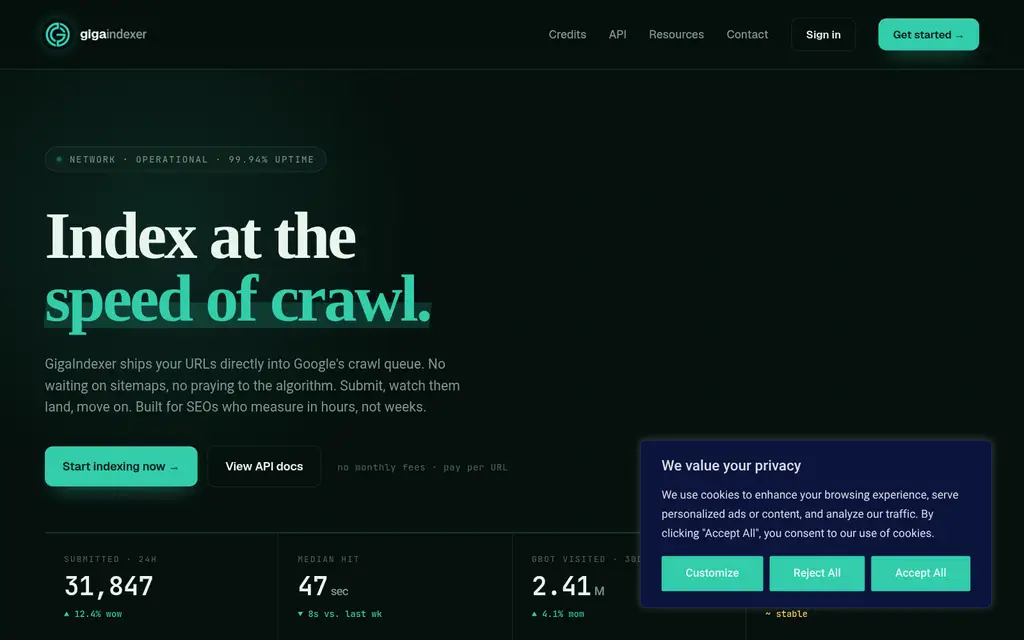
Premium per-URL pricing - roughly $0.25-0.98 per URL, since its homepage and credits page list different prices - with a refund programme whose terms weren't published on its pricing pages when we checked. It logs each Googlebot visit per URL (IP, time, status), but at over 50x the per-URL cost of bulk options this is insurance, not infrastructure.
The use case it fits: you bought fifteen $400 guest posts and want per-URL crawl receipts on exactly those URLs. The use case it doesn't: anything involving more than a few hundred links, where the same spend buys you tens of thousands of submissions elsewhere.
Best for: small batches of expensive placements where per-URL crawl receipts are worth the premium.
7. Indexceptional
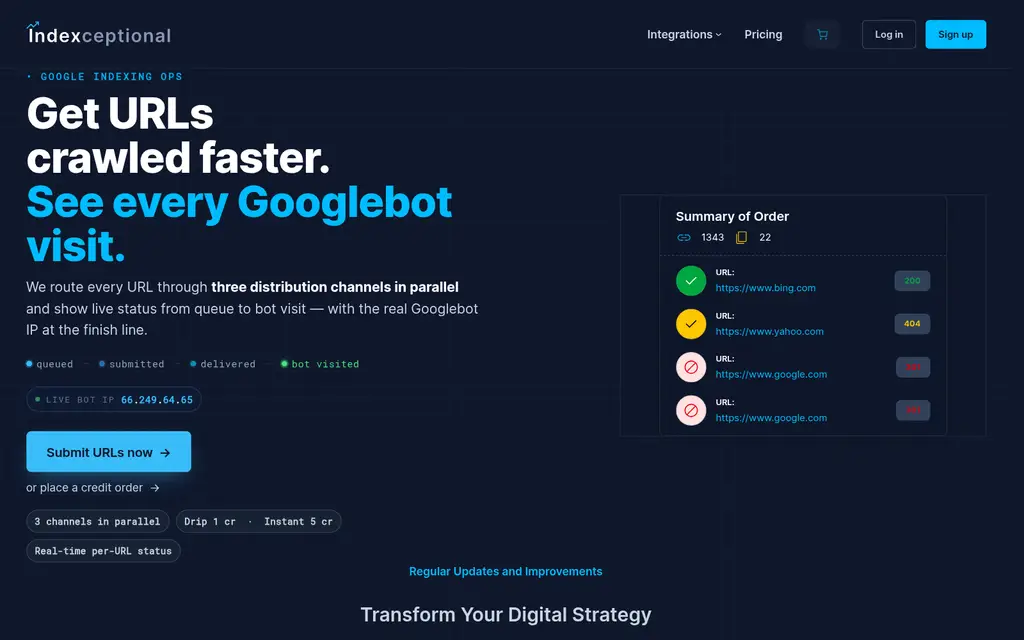
The newest premium entrant, with a genuinely good idea: a per-URL pipeline view that shows the IP it recorded when a bot visits your URL. That's closer to receipts than batch-level percentage reports.
The problem is price. Drip-feed URLs cost $0.25-0.48 each at current sale prices (instant indexing costs five credits per URL), and there are no refunds, which confines it to a handful of high-value URLs. Crawl evidence also still isn't index verification - a Googlebot visit doesn't mean the page made it into the index, so you'll still be running index checks somewhere else.
Best for: SEOs who want per-URL crawl evidence and don't mind paying a steep premium for it.
8. Speed-Links
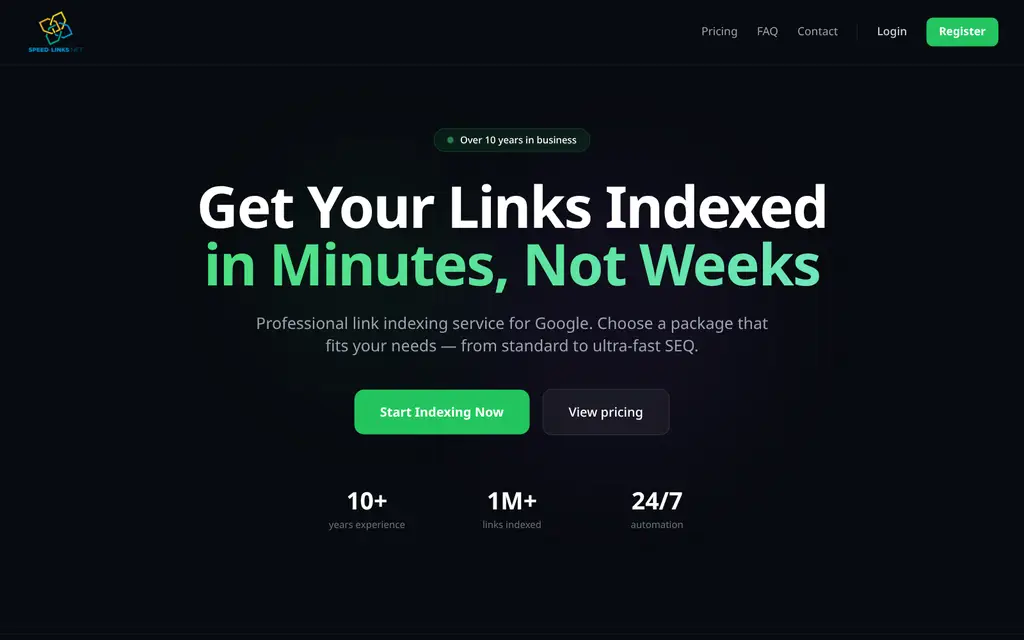
An entry-level budget option that shows up in most community threads. It sells three methods - Regular, VIP subscriptions and SEQ credit packs - from about $0.019 per link on VIP plans to $0.165 on small SEQ packs, with drip-feeding over 1 to 30 days and an API. Regular-method links usually appear in Google 20-30 days after processing, by its own account, and there are no refunds.
Reporting is a progress preview rather than an index check, so you'll want to verify results elsewhere. As a low-commitment way to test whether indexing tools move the needle on your link profile at all, it's a harmless starting point.
Best for: dipping a toe into paid indexing with minimal spend.
9. Links Indexer
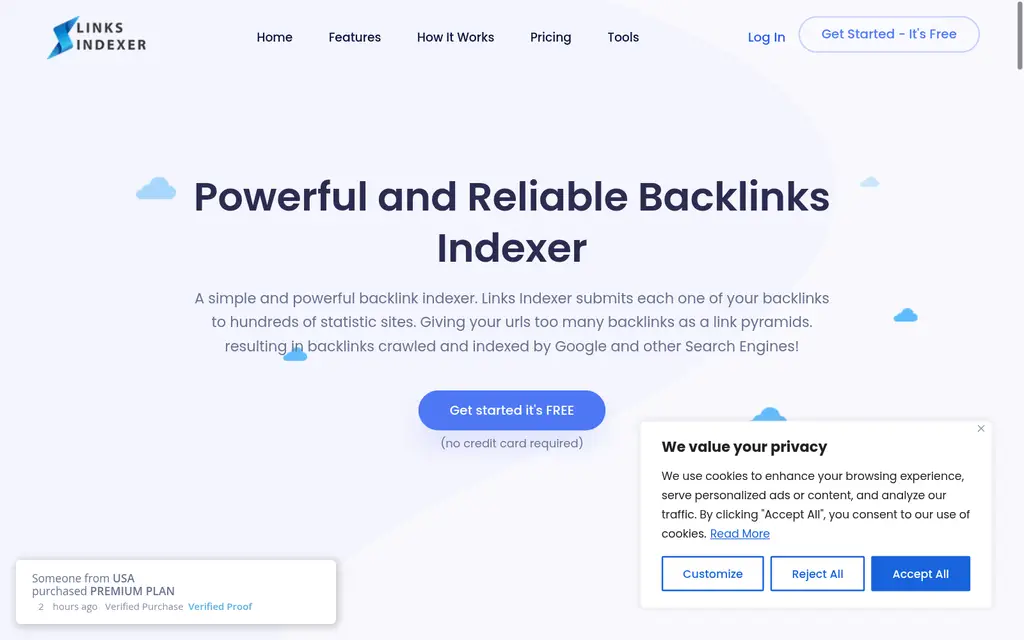
The freemium option: a free plan covers 100 links a day, and paid plans start at $9.99 a month for large daily quotas. It describes its method as pinging each link and requesting a crawl, and says most links get indexed in about a week. It doesn't issue refunds as a rule.
Ping-style signals are the oldest technique in this list and the least dependable for third-party pages, which is why paid credit-based tools exist. For client work or money sites, verify anything it reports with an independent index check. For throwaway tiered projects, free is free.
Best for: experimentation and burner projects where cost matters more than certainty.
10. Google Search Console + The Indexing API
The free baseline - but its scope has narrowed sharply, and most articles on this topic are running on outdated information. The Indexing API is now explicitly restricted to pages with job-posting or broadcast-livestream structured data. New API projects get a 200-request test quota, but Google won't actually send crawls against it until you've submitted the access-request form and had your site approved for those content types. The days of quietly pushing arbitrary URLs through the API are over.
GSC's URL Inspection tool still works for manually requesting crawls of pages you own, one URL at a time, with tight daily quotas. And the structural limitation is the reason the entire backlink indexer category exists: none of it touches third-party properties. The guest post on someone else's site, the citation, the press release pickup - none of them can go through your GSC.
Best for: your own domains - and the API only if your content genuinely is job postings or livestreams. For backlinks, it's not an option at all.
Is There a Good Free Backlink Indexer?
The honest answer: not for backlinks. Triggering crawls at scale costs money - infrastructure, submission channels, IPs - so anything free is either severely rate-limited, running ping-era methods that stopped working a decade ago, or baiting crawls with spam networks (see Links Indexer above). Your real free options in 2026:
- Google Search Console for URLs on domains you own. Genuinely works, doesn't scale, can't touch third-party pages.
- Bing Webmaster Tools + IndexNow for owned URLs. Underrated, since ChatGPT search leans heavily on Bing's index.
- Internal links from frequently crawled pages - the oldest free indexer in the world, and still effective on your own sites.
- Trial credits from paid tools, which amount to a real free test rather than a gimmick.
For third-party backlinks, budget for a paid tool. At fractions of a cent per URL against placements costing $100-500 each, indexing spend is a rounding error protecting the whole investment.
Backlink Indexer FAQs
What is the best backlink indexer in 2026?
IndexChex is the best backlink indexer for most SEOs because it combines submission and verification in one tool. IndexChex indexes up to 10,000 URLs per job from $0.0014 per URL - the lowest per-URL rate of any credit-based tool here - and can schedule an automatic index check 1-5 days after submission to prove what actually got indexed. Rapid URL Indexer is the strongest alternative if you prefer a pay-per-indexed refund model, and SpeedyIndex is the best-known option that charges only for indexed links.
What does a backlink indexing tool actually do?
A backlink indexing service pushes Googlebot to crawl URLs it would otherwise ignore or discover slowly - typically pages on third-party sites where your backlinks live. Good tools do this through clean submission and discovery channels; bad ones blast your URLs across spam networks. No tool controls indexing itself: crawling is forceable, indexing is Google's quality decision.
Why aren't my backlinks getting indexed?
Google has been rationing crawl budget aggressively since the Helpful Content updates. Links on low-crawl-frequency pages sit undiscovered for weeks, duplicate-heavy formats like press releases and profile pages get canonicalized away, and low-quality pages fail Google's pre-index quality threshold entirely. An indexer solves the discovery half; page quality has to solve the rest.
How long does it take to index backlinks?
With a good indexing tool, first crawls happen within minutes to 24 hours, and indexation - when it happens - typically follows within 3 to 14 days. IndexChex averages under 2 minutes to first crawl on both modes, and IndexChex instant mode indexes 95%+ of URLs within 5-10 minutes. Without any tool, backlinks on infrequently crawled pages can take weeks or months, or never index at all.
Are backlink indexers safe?
Tools that use clean submission channels are safe - they just accelerate discovery of a URL, which is indistinguishable from organic crawling. The unsafe ones are the free or old-school tools that build spam link pyramids pointing at your URLs to bait crawls. Ask any indexer how it triggers crawls before pointing it at links you paid for.
Is there a good free backlink indexer?
Not really. Google Search Console is free and works, but only for domains you own - useless for backlinks. Free third-party indexers are either heavily rate-limited, built on dead ping-era methods, or use spam techniques that put your links at risk. At $0.002-0.05 per URL against placements costing $100+, paid indexing is a rounding error protecting the investment.
Can any tool guarantee my backlinks get indexed?
No, and any tool claiming a 100% indexing guarantee is lying by definition. Indexers force crawls; Google decides what enters the index based on page quality. High measured averages exist - IndexChex instant mode indexes 95%+ of URLs within minutes - but the honest framings in this market are measured rates and crawl guarantees (IndexChex) or refunds for URLs that fail to index (Rapid URL Indexer, SpeedyIndex, Omega Indexer, IndexMeNow).
How do I verify my backlinks are actually indexed?
Never take the indexer's own success report at face value. Run independent index checks - site: searches at small scale, or a bulk index checker for real campaigns. IndexChex builds this in: IndexChex runs an automatic index check 1-5 days after submission and resubmits unindexed URLs in one click. For other indexers, you'll need a separate checking tool to audit results.
Stop paying for backlinks Google never sees.
Index up to 10,000 URLs per job, then verify the results with built-in scheduled index checks.